
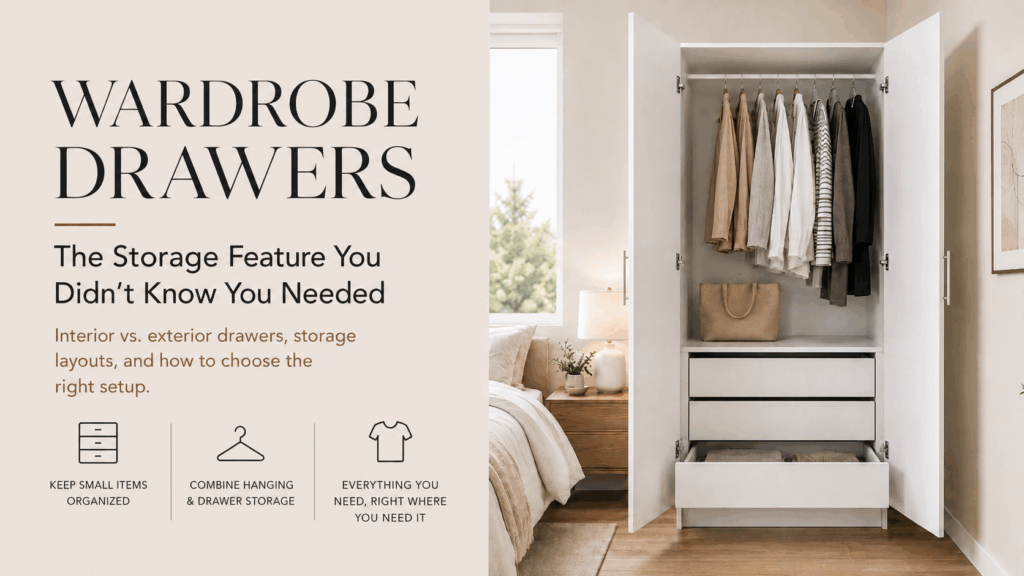
A wardrobe with a hanging rod and a few shelves handles the basics. But the moment you start living with one as your primary storage, you notice the gap pretty quickly: where do the folded things go? Socks, underwear, t-shirts, workout clothes, pajamas, scarves, belts — all the items that do not hang well and do not stack neatly on a shelf. If your wardrobe does not have drawers, those items end up in piles that topple over, in bins that you have to dig through, or scattered across a separate dresser that takes up even more floor space. The fix is simple: wardrobes with drawers. Think of a wardrobe with drawers as a dresser plus — you get the same organized drawer storage that a dresser provides, but the space above becomes a full cabinet with hanging rods, shelves, and doors. Whether the drawers are on the exterior of the wardrobe where you can access them without opening a door, or tucked inside behind the doors as interior compartments, drawers transform a wardrobe from a closet alternative into a complete clothing storage system. Here is what to know about choosing the right drawer setup for your space.
Why Drawers Make or Break a Wardrobe
The difference between a wardrobe that works and one that frustrates you often comes down to drawers. Hanging rods handle coats, dresses, blouses, and anything that needs to stay wrinkle-free. Shelves work for folded sweaters, bags, and bins. But drawers do something neither of those can: they keep small, loose items contained, separated, and accessible without unstacking anything. Think about what lives in your dresser right now. Socks, underwear, bras, t-shirts, gym shorts, sleepwear, accessories — those items take up more space than most people realize, and they are the hardest to keep organized on open shelves. Drawers are also more ergonomic than shelves for everyday items. Instead of reaching into a shelf and sorting through a stack, you pull a drawer toward you and everything inside is visible and accessible at once. The items come to you rather than the other way around. That said, shelves have their own advantages. Adjustable shelves can be repositioned as your storage needs change, and they accommodate items of varying sizes more flexibly than a fixed drawer. The best wardrobes combine both — drawers for the small, loose items you access daily, and shelves for the bulkier things that are easier to grab from an open compartment. For anyone using a freestanding wardrobe as their primary closet — especially in a room without a closet — drawers are the feature that eliminates the need for a separate dresser entirely. A wardrobe is essentially a dresser plus: it gives you everything a dresser does, with a full cabinet above it for hanging and shelf storage. One piece of furniture, everything in one place.
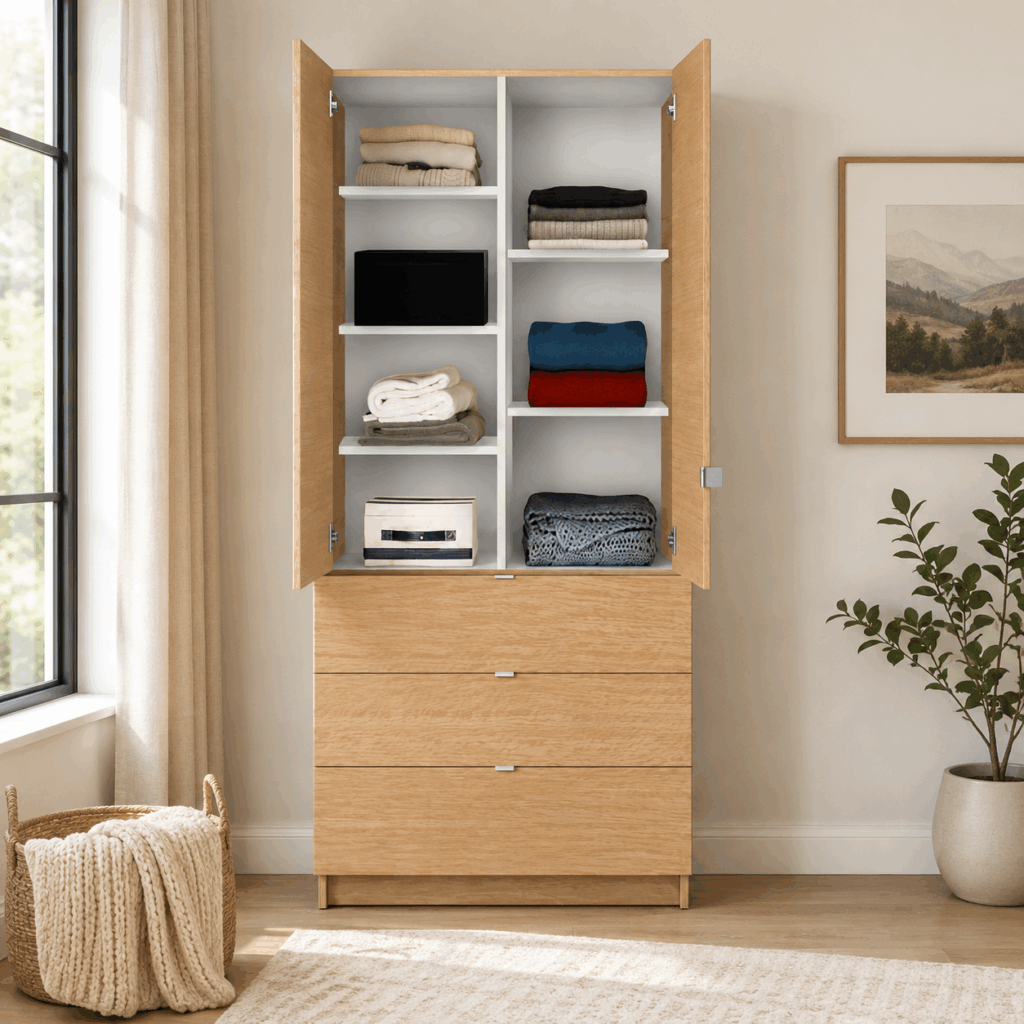
Exterior Drawers vs. Interior Drawers
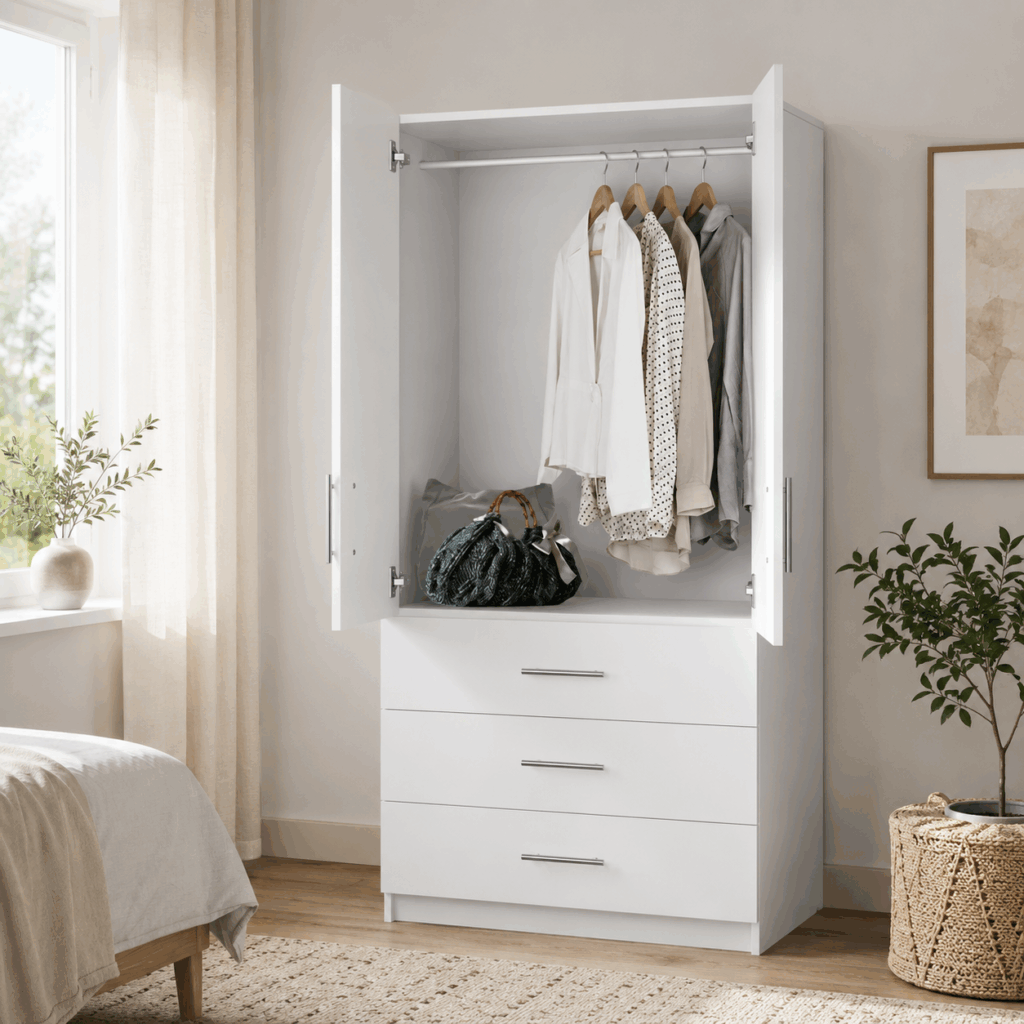
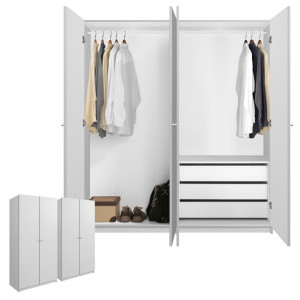
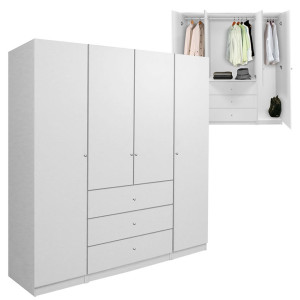
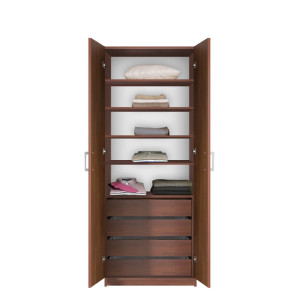
Wardrobe drawers fall into two categories based on where they sit: exterior or interior. Exterior drawers are accessible from the outside of the wardrobe without opening any doors. These typically sit in a visible section between hanging compartments or along the bottom of the wardrobe, and you can pull them open anytime. This is the most common layout for wardrobe closet systems — a stack of drawers in a dedicated section with a hanging rod on each side. Because you do not need to open a door first, exterior drawers are the faster, more convenient option for items you reach for every day. They also give the wardrobe a visual anchor that makes the whole piece look balanced and intentional. Interior drawers sit inside the wardrobe behind the doors, visible only when you open up. These drawers work well for items you do not need constantly — seasonal accessories, specialty clothing, or overflow storage. Some wardrobes combine interior drawers with a hanging rod and shelves in the same compartment, giving you a little bit of everything behind a single door. Interior drawers also keep the exterior of the wardrobe looking clean and uniform since the drawer fronts are hidden. Many wardrobe systems use a combination of both. Exterior drawers handle the daily essentials — socks, underwear, t-shirts — while interior drawers behind a door store the things you reach for less often. The split keeps everyday items within arm's reach while tucking the rest neatly out of sight.
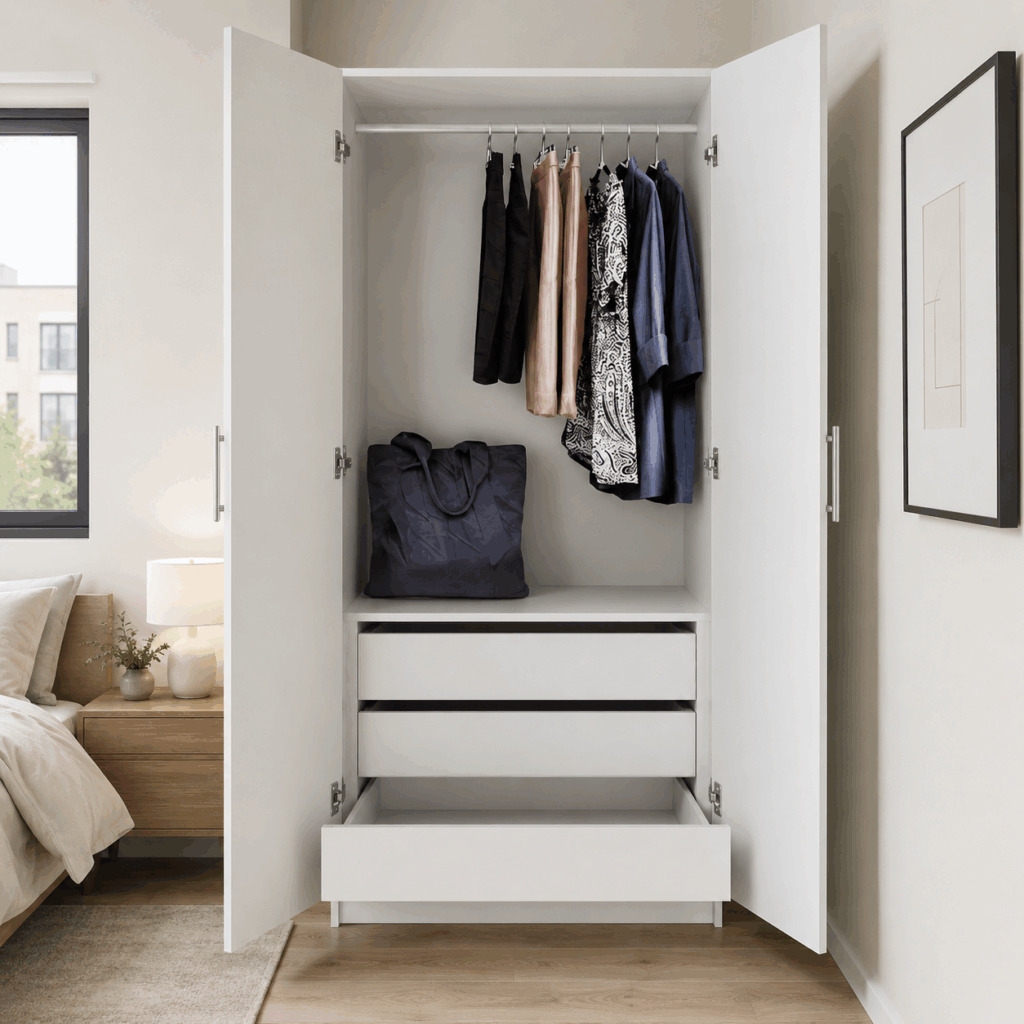
How Many Drawers Do You Actually Need?
The number of drawers you need depends on whether the wardrobe is your only storage or a supplement to an existing closet. Most wardrobes accommodate up to four drawers in a single section, so the question is really how to make those drawers count. If the wardrobe is your primary closet — your only place for clothing, accessories, and everyday items — a full four-drawer section is the way to go. That gives you dedicated space for socks and underwear, t-shirts and workout clothes, pajamas and loungewear, and a fourth drawer for accessories, scarves, or belts. Four drawers cover the major categories without cramming everything together. If the wardrobe supplements an existing closet or dresser, two to three drawers are usually enough. They handle the overflow — the categories that do not fit in your main closet or the items you want in a different room (like a guest room wardrobe with drawers for linens and extra blankets). For a shared wardrobe used by two people, look for a wardrobe system with drawer sections on both sides. Each person gets their own set of drawers, and you avoid the "whose socks are these" problem entirely. The key insight is that you almost always need more drawer space than you think. People tend to underestimate how much of their clothing is folded rather than hung. A quick count of what is in your current dresser usually settles the question.
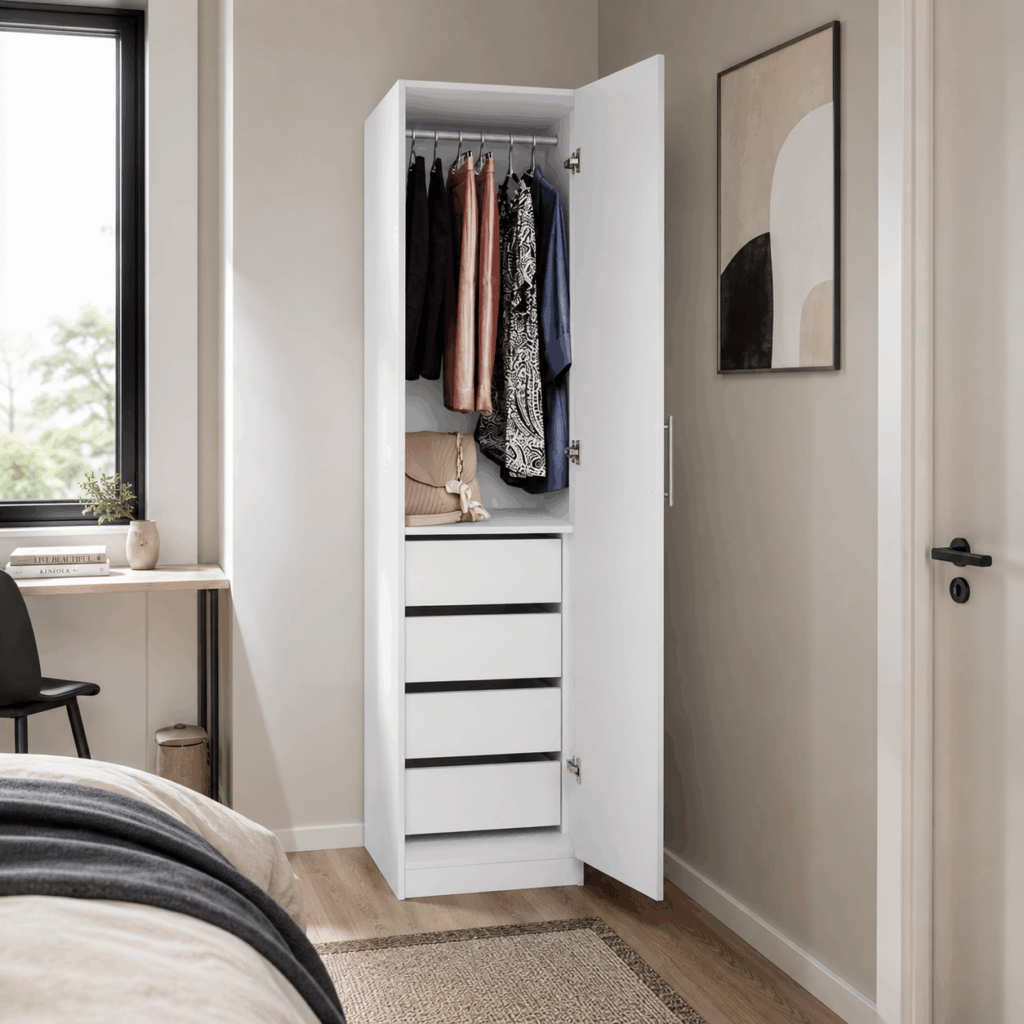
Pairing Drawers with Other Storage Features
Drawers work best when they are part of a balanced layout. A wardrobe with nothing but drawers would be unusual — most people need some combination of hanging, shelving, and drawer storage. That is the beauty of a wardrobe as a dresser plus: the drawers handle the small stuff while the cabinet space above takes care of everything else. The most versatile configuration is a three- or four-door wardrobe with an exterior drawer section flanked by hanging compartments. One side gets a full-length hanging rod for dresses, coats, and longer items. The other side gets a double rod (one high, one low) for shirts and folded pants. The exterior drawers handle everything else. This setup covers almost every clothing category in a single piece. If you are adding a narrow wardrobe to a room that already has some hanging space (like a small closet that only fits a rod), prioritize drawers and shelves over additional hanging. The wardrobe fills the storage gap rather than duplicating what you already have. For a tall wardrobe with upper cabinets, consider putting drawers in the lower section and using the upper shelves for seasonal or rarely accessed items. The drawers stay at a comfortable height for daily use, and the cabinet space above handles the things you only reach for a few times a year.
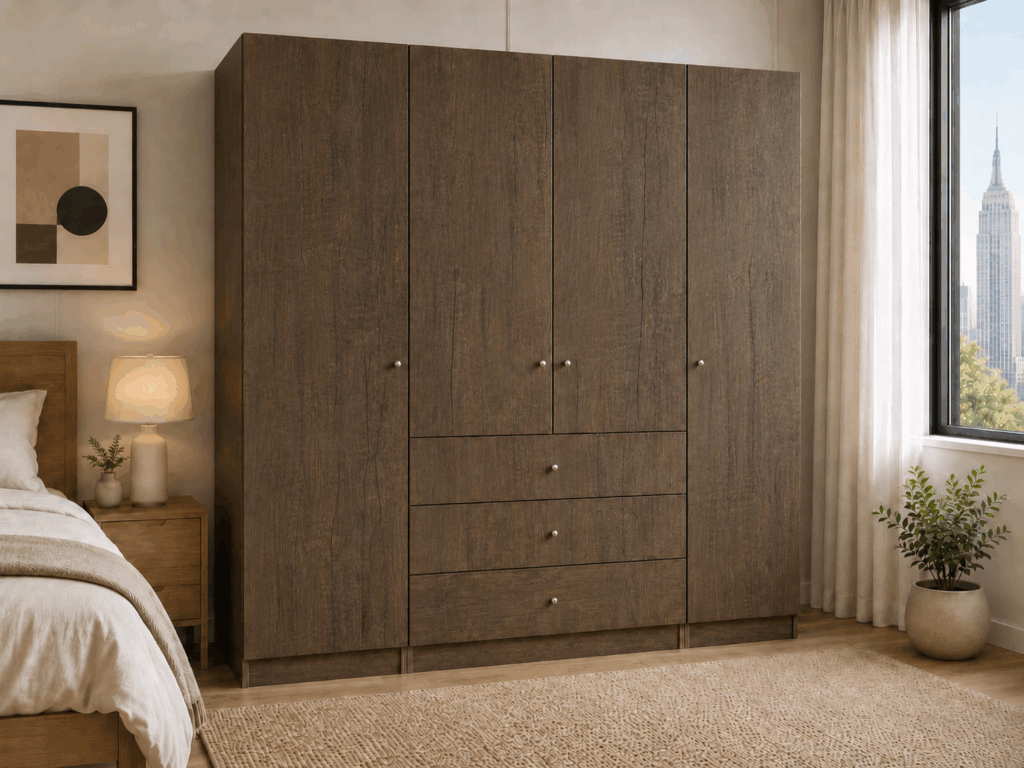
Wardrobe Drawer Solutions from Contempo Space
At Contempo Space, every wardrobe and closet system is built to order with the drawer configuration you choose. You select how many drawers, whether they go on the exterior or interior, the finish, the handle style, and the overall size of the unit. Whether you need a compact two-door wardrobe with a couple of drawers or a full wardrobe system with drawer sections on both sides, each piece is made for the way you actually use it. All wardrobes are freestanding, arrive fully assembled, and require no wall mounting or installation. Free delivery and in-home setup are available in the New York City metro area and northeastern New Jersey for qualifying orders. Drawers are the difference between a wardrobe that almost works and one that handles everything. Browse our wardrobe and closet collections below to find the right configuration for your space.
Related Items
Related Posts