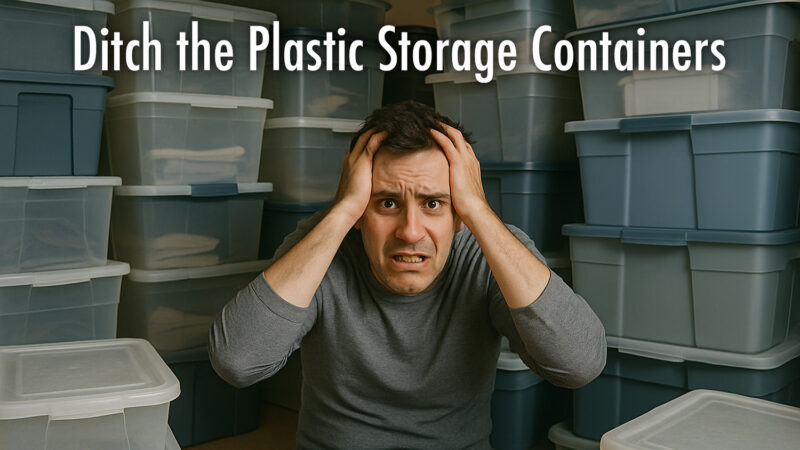


It hit me last summer when I was paying another $150 for my storage unit—the monthly price I'd been stuck with for three years. I'd visited the unit exactly twice in those three years just to shove some more stuff in there.
Three years. Thirty-six months. $5,400 gone.
And for what? A bunch of holiday decorations, college textbooks I'll never open again, and furniture that doesn't fit my current house but that I'm "definitely going to use someday."
Most of us are drowning in stuff. We've got so much of it that we're paying someone else for the privilege of storing it somewhere we can't even see it. The self-storage industry is booming—a $39 billion behemoth with over 49,000 facilities across the country. There are more storage facilities than McDonald's restaurants.
The Real Cost of Self-Storage
A standard 10×10 storage unit costs between $100-300 monthly, depending on location and whether it's climate-controlled. That's $1,200-3,600 per year.
Let's get concrete. Say you're paying $150 monthly for your unit. Over five years, that's $9,000. Ten years? $18,000. Enough for a decent car.
Meanwhile, a comprehensive home storage system—including quality shelving, organizers, or armoires—might run you $800-6,000 upfront (depending on the extent of your needs). Let's do the math.
The Investment Approach to Home Storage
Here's a scenario: The Johnson family has been paying $175 monthly for a storage unit containing seasonal items, memorabilia, and rarely-used kitchen equipment.
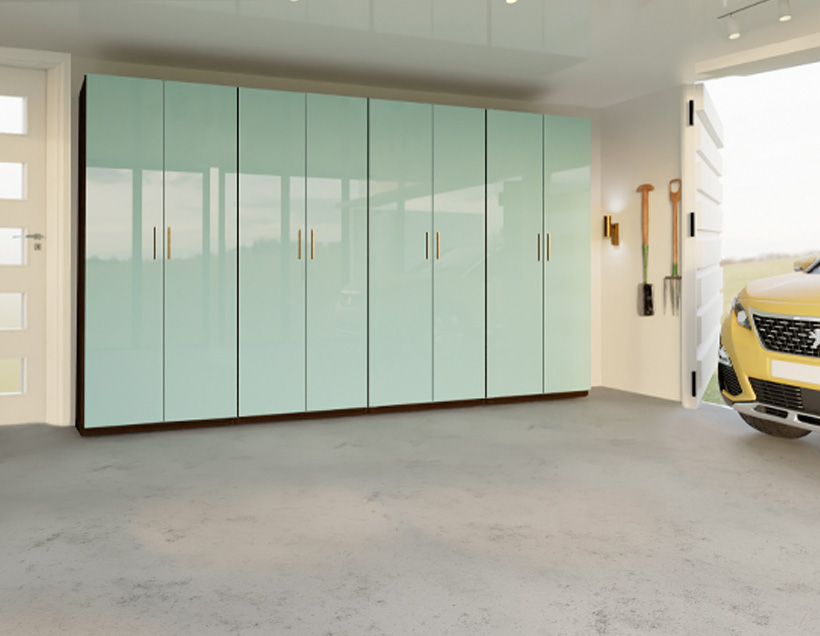
Their alternative? Investing $2,100 in custom shelving (including hidden compartments) for the garage or any other wall space, or a closet organization system.
The break-even point? Exactly 12 months. After that first year, they're saving $175 every single month. By year five, they've kept $8,400 in their pockets.
And their stuff? It's easily accessible. No more driving across town when they suddenly need that fondue pot they use once a year. No more digging through unlabeled boxes. No more forgetting what they have because it's been out of sight for so long.

The Hidden Psychology of Storage Units
We need to talk about why we use storage units in the first place. Sometimes it's legitimate—you're between homes, dealing with a family member's estate, or temporarily downsizing.
But often? It's avoidance.
Storage units let us postpone decisions. They're the physical manifestation of "I'll deal with this later." They allow us to keep accumulating without confronting the reality of our limited space.
We've seen it countless times while working with clients. The longer something stays in storage, the less likely it is ever to come out. People literally forget what they're storing.
Rethinking What You Keep
Before investing in any storage solution, be ruthless. Ask yourself:
- Have I used this in the past year?
- Would it cost less to replace it than to store it?
- Am I keeping this for legitimate reasons?
- Does this item bring me joy or practical value?
- If I saw this in a store today, would I buy it again?
- Am I keeping this "just in case" for a scenario that's unlikely to happen?
We had a client who realized she was paying $2,400 annually to store $1,800 worth of furniture.
Home Storage Solutions That Make a Difference
If you've pared down and still need storage, these investments pay dividends:
1. Maximize Vertical Space
Your ceiling height is an untapped resource. Install floor-to-ceiling shelving in garages, closets, basements, or utility rooms. Get storage toppers for wardrobes.
2. Compression Technology
Vacuum-seal bags can reduce clothing volume by 75%. Seasonal wardrobes suddenly take up a quarter of the space. This is great for bedding, winter coats, and bulky sweaters.
Compression works for more than clothes. Special bags exist for pillows, stuffed animals, and even some types of sporting equipment.
3. Multi-Functional Furniture
Why have furniture that does just one job? Look for:
- Storage beds with drawers underneath
- Headboards like pier walls with built-in shelving, drawers, and compartments
- Modular closet systems and wardrobes that can offer a combination of shelving, hanging rods, drawers, and compartments
- Entertainment centers and TV wardrobes that combine entertainment with storage and organization
- Room dividers that also provide storage compartments
- Efficient wall units with built-in office workspace
These pieces add capacity while sacrificing minimal living space.
4. Digital Transformation
Those 12 boxes of photos? Scan them. The CD collection gathering dust? Upload it. Old tax documents? Most can be stored electronically.
One family we worked with had an entire bookcase dedicated to photo albums. After digitizing them (and keeping just a few special physical albums), they reclaimed an entire corner of their living room.
Cost-Benefit Analysis: Real Numbers
Let's break down the economics more thoroughly:
Scenario A: Continue with Storage Unit
- Monthly cost: $175
- Annual cost: $2,100
- 5-year cost: $10,500
- 10-year cost: $21,000
Scenario B: Invest in Home Storage
- Upfront investment: $2,100
- Monthly maintenance cost: $5 (for cleaners and such)
- 5-year total cost: $2,100
- 10-year total cost: $2,100
With proper care, our furniture can last a lifetime
Savings over 10 years: $18,900
And time! If your storage unit is 20 minutes away, each round trip costs you 40 minutes. Make just one trip monthly, and that's 8 hours per year—a full workday—spent driving to look at your own possessions.
The Hidden Benefits Beyond Money
The financial math makes sense. But the benefits go beyond your wallet.
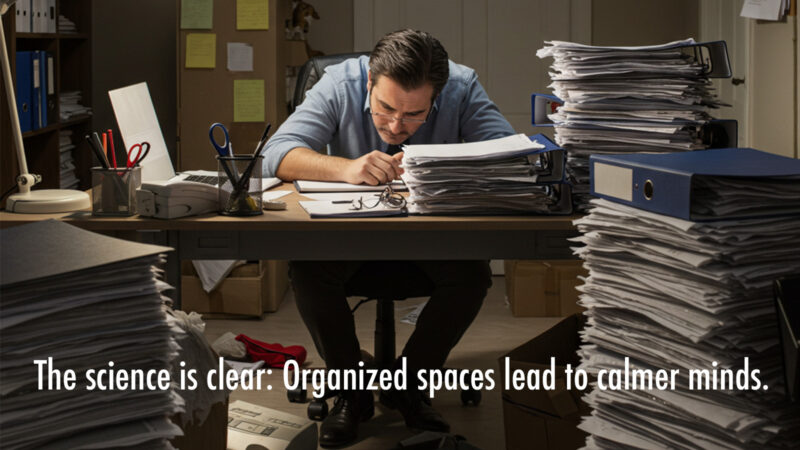
Having your belongings organized and accessible reduces stress. No more "where did I put that?" moments. No more rummaging through boxes in a dusty storage unit.
There's also the environmental impact. Well-organized homes tend to buy less duplicate stuff—how many times have you purchased something only to later find you already owned it but couldn't find it?
And there's something psychologically powerful about truly owning your space rather than outsourcing the problem. Your home becomes more functional. More peaceful. More yours.
When Storage Units Do Make Sense
I'm not suggesting storage units never make sense. They're valuable in specific scenarios:
- During moves or home renovations
- For legitimate short-term needs (less than 6 months)
- For businesses with inventory or equipment
- For specialized items that truly won't fit in your home (like boats or RVs)
- When storing items that will definitely be used in a future home
The key is honesty about your timeline and intentions. If you're telling yourself "just for now" but "now" has stretched to years, it's time to reconsider.
Contact Us for a Free Consultation
Related Posts